Aug 1, 2026Sample Garments & Bulk Production & Quality Control
What Is a Tolerance in Garment Manufacturing?
Learn what garment tolerances mean, why activewear needs them, how they affect fit and how brands set practical measurement and workmanship limits.
What Is a Tolerance in Garment Manufacturing?
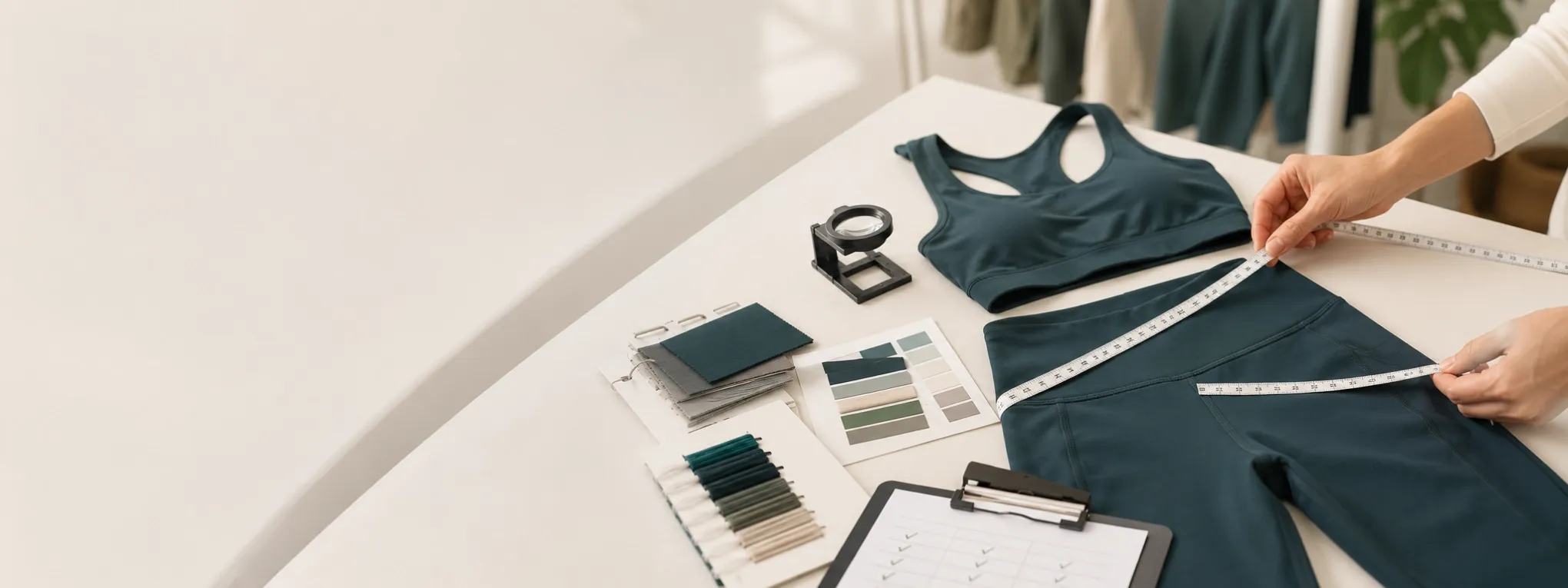
A tolerance is the permitted difference from a target specification. If a legging waist target is stated with an agreed plus/minus range, pieces inside that range may be accepted for that measurement-provided the garment also meets the other requirements.
Tolerance does not mean quality is unimportant. It recognizes that flexible materials, sewing operations and measuring methods contain variation.
Target, tolerance and actual result
- Target: the intended measurement or characteristic.
- Tolerance: the permitted deviation.
- Actual: the measured result of a sample or production piece.
A garment can have every individual measurement inside tolerance yet still fit poorly if several deviations combine in the same direction. Overall fit and pattern balance still matter.
Why activewear measurement is challenging
Stretch fabrics respond to handling. Results may change if the garment is pulled, not relaxed, measured immediately after sewing or placed differently on the table.
The tech pack should define:
- point of measure;
- garment position;
- relaxed or extended condition;
- whether curves are followed;
- reference edges and seams;
- any conditioning requirement.
Not every point needs the same tolerance
Critical fitted areas may justify tighter control than less influential details. Examples include waistband, underband, strap length or logo placement. Practical limits depend on material, construction, size and brand standard.
An unrealistically tight tolerance can create unnecessary rejection without improving customer experience. An overly broad tolerance can weaken fit consistency.
Tolerance also applies beyond measurements
Brands may define acceptable limits for color, placement, stitching, packaging and physical performance. Each must use a clear method and standard.
How buyers should set tolerances
- Begin with the approved fit and product risk.
- Understand material and construction capability.
- Prioritize measurements that control fit.
- Define one measuring method.
- Review size and grade implications.
- Confirm limits during sampling.
- Apply them consistently in production inspection.
- Revise with evidence, not convenience.
Why Choose Us: How GENY YOGA Helps Buyers Reduce Risk
Geny Yoga's experience with fitted yoga wear and sportswear helps buyers discuss tolerances in relation to fabric, construction and wearing function-not as arbitrary spreadsheet numbers.
Send your measurement chart and current tolerances. Geny Yoga can flag unclear points of measure or limits that should be discussed during sampling.
Inquiry Contact Form
To discuss an OEM, ODM or private-label activewear project with GENY YOGA, please send the following information:
- product category and reference images;
- target quantity by style, color and size;
- fabric direction, hand feel or performance requirement;
- logo, label, packaging and trim requirements;
- target market, timeline and destination;
- Tech Pack, size chart or sample comments if available.
Related Posts
Related Products And Services
Contact GENY YOGA
Email: info@genyyoga.com
WhatsApp: +86 190 2093 2815
Tell us what you want to develop, and our team will help review the product direction, sampling requirements and sourcing risk points before quotation.