Aug 1, 2026Buying Guides

PUMA Yoga Wear Review: Nylon vs Polyester for Better Yoga Sets

Evaluate PUMA yoga clothing, compare nylon vs polyester leggings, and learn how to develop reliable custom yoga sets with an experienced OEM producer.

WHAT LEADING SPORTS BRANDS GET RIGHT ABOUT YOGA WEAR

What PUMA Gets Right About Yoga Wear—and What Buyers Should Learn

Consumers rarely judge yoga clothing by fiber composition alone. They notice whether leggings feel comfortable, remain secure during movement, recover after stretching and still look appropriate outside the studio.
Buyers face a more complicated question: how can these consumer expectations be translated into a commercially viable yoga set with consistent fit, reliable quality and manageable production risk?
PUMA provides a useful market reference. Its yoga and studio offering connects movement, comfort and athleisure styling under a widely recognized sports brand. However, copying the appearance of a successful brand is not a product-development strategy. Buyers must understand why a garment works—and whether its fabric, pattern and construction are suitable for their own customers.
This article evaluates PUMA’s yoga clothing from a practical market perspective, compares nylon and polyester leggings, and explains how an experienced yoga set manufacturer should help buyers move from an idea to controlled bulk production.


How Does PUMA Approach Yoga Clothing?

PUMA is an international athletic and sportswear company with a much broader position than yoga alone. Yoga clothing sits within its women’s training, studio and athleisure offering rather than functioning as an isolated specialist category.
PUMA describes its Studio collection as a combination of fashion and function. Its yoga assortment includes leggings, bras, shorts, tops and relaxed training pieces. Public product pages also highlight features such as stretch, high-rise waistlines, moisture-management treatments, practical pockets and studio-to-everyday versatility. PUMA Women’s Yoga, PUMA Yoga Leggings
From a consumer perspective, this positioning addresses several real needs:
  • Comfortable movement during yoga or light training
  • A secure fit without excessive restriction
  • Moisture management during activity
  • Easy coordination between tops and bottoms
  • Styling suitable for both exercise and casual wear
  • Confidence associated with an established sports brand
PUMA’s yoga clothing is therefore best understood as accessible, sport-influenced studio apparel with strong athleisure relevance.

Where IS PUMA Strong?

1. Brand recognition reduces purchase hesitation

A recognized athletic brand gives consumers a familiar quality reference. Customers may be more willing to try a new pair of leggings when they already understand the brand’s general sports positioning.
For private-label buyers, the lesson is not simply to place a larger logo on a garment. Trust must be built through consistent sizing, clear product information, reliable imagery, practical features and dependable after-sales support.

2. Products are designed for more than one occasion

PUMA presents yoga leggings as products that can move between studio practice, training and everyday life. This reflects a broader activewear trend: many consumers expect one garment to cover exercise, travel, errands and casual styling.
For buyers, versatility can improve commercial potential—but only when the design genuinely supports it. A visually attractive yoga set may still fail if the waistband rolls, the fabric becomes transparent when stretched or the sports bra feels uncomfortable after extended wear.

3. Performance benefits are easy to understand

Certain PUMA training leggings feature high-rise construction, 7/8 lengths, moisture-management technology and hidden storage. These are concrete features that customers can understand without technical textile knowledge. PUMA Train All Day Leggings
This is an important product-development principle:
A technical feature only becomes commercially valuable when the wearer can understand and experience its benefit.

4. Fashion and function are presented together

Yoga clothing is no longer purchased only for yoga. Color, silhouette, seam placement and coordination influence purchasing decisions alongside stretch and moisture management.
PUMA communicates both sides clearly. This offers a useful benchmark for buyers developing matching yoga sets, studio collections or active-lifestyle capsules.

Where Should Buyers Evaluate More Carefully?

A strong brand does not mean every product is suitable for every customer or activity.
Before selecting or developing a yoga collection, buyers should still assess:
  • Intended activity intensity
  • Required support level
  • Compression preference
  • Fabric density and opacity
  • Waistband stability
  • Stretch recovery
  • Seam position
  • Pocket requirements
  • Climate and target season
  • Expected retail price
  • Customer body-size range
PUMA’s yoga and studio assortment may suit consumers who want a balance of sport, comfort and recognizable styling. A specialist yoga brand may prioritize a different hand feel, more advanced contour construction, deeper size development or activity-specific fabrics.
The correct question is not, “Is PUMA yoga wear good?”
A more useful question is:
“Which parts of PUMA’s product strategy fit my customer, and which parts should be adapted for my own market?”

Nylon vs Polyester Leggings: Which Is Better?

There is no universally superior fiber. The right choice depends on the intended product, performance level, hand feel, price positioning and care expectations.
Both nylon and polyester are commonly blended with spandex to create stretch yoga fabrics. However, they normally produce different wearing experiences.
Buyer consideration
Nylon-spandex leggings
Polyester-spandex leggings
Hand feel
Often softer and smoother
Can feel slightly firmer or more structured
Premium positioning
Common in premium yoga collections
Common across value and performance ranges
Abrasion performance
Generally strong when properly engineered
Generally durable and practical
Moisture behavior
Depends on yarn, knit and finishing
Often selected for quicker-drying sportswear
Color and printing
Well suited to solid premium colors
Particularly useful for prints and sublimation
Cost
Frequently higher
Often more cost-efficient
Typical application
Yoga, Pilates and soft-touch leggings
Training, running, printed leggings and volume programs
Important risk
Surface snagging, shine or dye consistency
Odor retention and less luxurious hand feel in some constructions
These are general tendencies, not guarantees. Fiber content alone cannot predict finished-garment performance.
GSM, yarn specification, knitting structure, dyeing, finishing, pattern tension and garment construction can substantially change the result.

Why Buyers Choose Nylon-Spandex Fabric for Yoga Wear

A well-developed nylon-spandex fabric for yoga wear can provide a smooth, close-to-skin feel with controlled stretch and recovery. This makes it popular for yoga leggings, Pilates sets, sports bras, fitted tops and sculpted activewear.
Its main commercial advantages may include:
  • Soft and refined hand feel
  • Comfortable four-way stretch
  • Close body fit
  • Good stretch recovery when properly specified
  • A clean surface for solid-color collections
  • Suitability for coordinated premium yoga sets
However, “nylon and spandex” is not a complete fabric specification.
A buyer should also confirm:
  • Exact fiber percentages
  • Fabric weight in GSM
  • Fabric width
  • Knit construction
  • Stretch in both directions
  • Recovery after extension
  • Colorfastness
  • Shrinkage
  • Pilling performance
  • Opacity under stretch
  • Surface appearance
  • Moisture-management requirements
For example, two fabrics labeled “75% nylon and 25% spandex” can feel and perform very differently because of yarn type, knitting density and finishing.

When Polyester-Spandex Is the Better Choice

Polyester-spandex can be a practical option for price-sensitive activewear, printed leggings, running products and larger-volume programs.
It may be preferred when a buyer needs:
  • More cost-controlled development
  • Strong color versatility
  • Printed or sublimated designs
  • Quick-drying performance
  • Reliable production scalability
  • Training-oriented rather than ultra-soft positioning
Polyester should not automatically be treated as a lower-grade fiber. A properly engineered polyester fabric can perform very well. Equally, an expensive nylon fabric can still produce a poor garment if its opacity, recovery or construction is unsuitable.
The commercial decision should be based on the complete product target—not fiber reputation alone.

What Consumers Actually Notice in Yoga Leggings

Consumers may never ask about fabric width or seam allowance, but they quickly notice the consequences of poor development.

1. Transparency during movement

A fabric can appear opaque when relaxed but become visibly transparent during squats, bends or deep stretches.
This risk is influenced by:
  • Fabric density
  • Color
  • Stretch percentage
  • Pattern reduction
  • Garment size
  • Yarn and knit construction
Opacity should therefore be evaluated on the finished sample under movement—not only by holding an unstretched fabric swatch.

2. Waistband rolling or slipping

A high-rise waistband is not automatically stable. Rolling and slipping may result from unsuitable waistband height, incorrect tension, insufficient recovery or poor alignment between the pattern and fabric.
A reliable sample review should include sitting, bending, walking and repeated movement.

3. Inconsistent compression

Some consumers want a barely-there yoga feel. Others prefer a more secure, sculpted fit.
The problem arises when the product description promises comfort but the garment feels restrictive—or promises support but provides insufficient hold.
Compression should be defined during development rather than left to subjective interpretation.

4. Uncomfortable seams

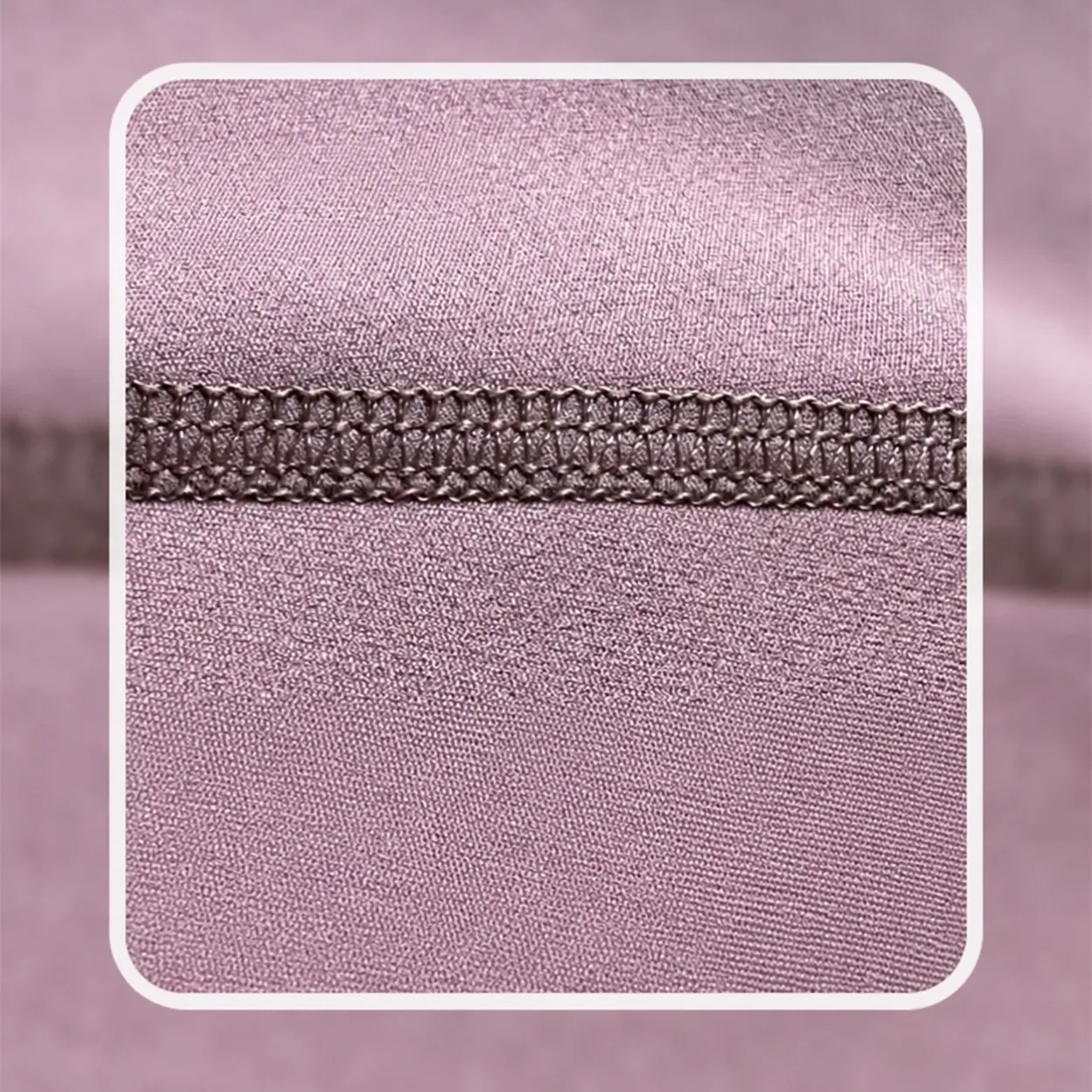
Seams placed in high-friction areas can create pressure or irritation. Thread elasticity, seam type, stitch density and seam placement all influence comfort and durability.

5. Poor recovery

A garment may fit well during the first fitting but loosen around the knees, waist or seat after extended wear.
Stretch recovery should be assessed before bulk production, particularly for close-fitting leggings and fitted shorts.

What Buyers Need From a Yoga Set Manufacturer

Searching for a yoga set manufacturer is not only a search for sewing capacity. Buyers need a development partner that can convert a product brief into a repeatable commercial product.
A capable supplier should help clarify five areas before production.

1. Product positioning

The factory should understand whether the product is intended for:
  • Yoga or Pilates
  • Gym training
  • Running
  • Tennis or studio exercise
  • Everyday athleisure
  • Premium retail
  • Wholesale distribution
  • E-commerce
  • A specific climate or regional market
This determines the appropriate fabric, construction, support level and cost structure.

2. Fabric selection

Instead of recommending one fabric for every order, a professional supplier should compare options according to the project.
For a custom yoga set, this may include:
  • Nylon-spandex for a softer premium hand feel
  • Polyester-spandex for performance or cost control
  • Ribbed fabric for texture and visual differentiation
  • Brushed fabric for softness
  • Interlock construction for greater coverage
  • Lightweight fabric for warm climates
  • Higher-density fabric for controlled compression

3. Sample development

Sampling should confirm more than appearance. Buyers should review:
  • Silhouette and proportions
  • Size measurements
  • Bra support and coverage
  • Legging opacity
  • Waistband behavior
  • Seam comfort
  • Pocket placement
  • Stretch and recovery
  • Color and trim coordination
  • Label and packaging requirements
A visually approved sample should not move directly to bulk production if functional points remain unresolved.

4. Pre-production confirmation

Before bulk cutting, the buyer and supplier should align on:
  • Approved sample
  • Fabric and color
  • Size specifications
  • Stitching and workmanship
  • Logo method and position
  • Labels and hangtags
  • Packaging
  • Quantity breakdown
  • Inspection criteria
  • Delivery terms
This approval stage prevents verbal assumptions from becoming bulk-order disputes.

5. Production and quality control

Risk is reduced when inspection is integrated throughout production rather than delayed until the goods are finished.
Useful control points include:
  1. Incoming fabric and trim review
  1. Color and material confirmation
  1. Cutting inspection
  1. In-line sewing checks
  1. Measurement checks
  1. Workmanship inspection
  1. Finished-garment review
  1. Packing and quantity verification
  1. Shipment-release confirmation

How GENY YOGA Supports Custom Yoga Set Projects

GENY YOGA works with brands, wholesalers and activewear buyers on ready-style selection, private-label development, OEM production and buyer-supplied material projects.
Our objective is not to recommend the most expensive fabric or the most complicated construction. It is to help the buyer select a commercially appropriate solution for the intended customer, price range and sales channel.

What We Can Develop

Depending on the project, custom collections can include:
  • Yoga bras and leggings sets
  • Tank tops and shorts sets
  • Long-sleeve studio sets
  • Yoga tops with integrated bra construction
  • Ribbed activewear sets
  • Tennis skirts and active skorts
  • Pilates clothing
  • Training leggings
  • Jackets and layering pieces
  • Men’s and women’s activewear
Customization can cover fabric, color, sizing, logo application, labels, packaging and construction details.
Custom DESIGN production MOQ: 500 pieces per color per design.

How We Help Reduce Buyer Risk

Clear requirements before quotation

A meaningful quotation requires more than a reference photograph. Quantity, fabric, size range, logo method, destination and packaging all affect cost and production.
We first clarify these points so that buyers can compare realistic project scopes instead of receiving an attractive but incomplete price.

Fabric comparison rather than one-option selling

Where appropriate, we can compare nylon-spandex and polyester-spandex alternatives according to hand feel, performance target, cost and product positioning.

Sample approval before bulk production

The sample stage helps buyers evaluate fit, construction, material and workmanship before committing to bulk production.

Pre-production alignment

Color, fabric, stitching, workmanship, trims and packaging should be confirmed before the bulk order proceeds.

Inspection before shipment

Finished goods should be checked against the agreed requirements before packing and shipment release.
This process cannot remove every sourcing risk, but it makes specifications, responsibilities and approval points clearer and more controllable.

Questions to Ask a Custom Yoga Set OEM Producer

Before selecting a custom yoga set OEM producer, buyers should ask:
  1. Can you develop the product for its intended activity and price level?
  1. Can you explain why a specific fabric is being recommended?
  1. How do you check stretch recovery and opacity?
  1. How are sample comments documented?
  1. Is a pre-production sample required?
  1. How are colors approved?
  1. What inspections take place during production?
  1. Can you support private labels and custom packaging?
  1. What information is required for an accurate quotation?
  1. How are shipment quantities and packing details verified?
A trustworthy supplier should answer these questions clearly and identify any information that still needs confirmation.

Final Perspective: Learn From Leading Brands, Then Build for Your Customer

PUMA demonstrates several sound principles: combine performance with wearable styling, communicate benefits clearly and design products for both activity and daily life.
But a successful private-label collection should not be a superficial imitation of PUMA—or any other brand.
Buyers should begin with their own consumer:
  • What activities will the product support?
  • What hand feel do customers prefer?
  • How much compression is appropriate?
  • Which price level can the market accept?
  • Which recurring complaints must the product avoid?
  • How will quality remain consistent when production scales?
Nylon-spandex may be the right solution for a soft, premium yoga collection. Polyester-spandex may be more suitable for a printed, quick-drying or cost-controlled program. The correct choice is the one that aligns fabric, fit, construction, testing and target price.

Discuss Your Yoga Set Project With GENY YOGA

If you are developing a new yoga set, replacing an inconsistent supplier or comparing nylon and polyester fabric options, send GENY YOGA your project details.
Please include:
  • Product reference or technical drawing
  • Target market
  • Required quantity
  • Preferred fabric or performance
  • Size range
  • Color requirements
  • Logo and packaging needs
  • Target delivery schedule
We can review the requirements, identify the main development risks and recommend a practical next step for sampling and production.
Visit: www.genyyoga.com Contact GENY YOGA to discuss samples, customization and OEM activewear production.


Buyer FAQ

Is nylon or polyester better for yoga leggings?

Nylon-spandex is often selected for a softer, smoother and more premium hand feel. Polyester-spandex can offer good durability, color versatility and cost efficiency. The best option depends on the activity, target price and required performance.

What is a common fabric for premium yoga wear?

Nylon blended with spandex is widely used for premium yoga leggings, sports bras and fitted studio sets because it can provide softness, stretch and close-body comfort. Exact performance depends on GSM, yarn, knitting and finishing.

Is a higher spandex percentage always better?

No. More spandex can increase stretch and compression, but it may also change hand feel, cost, recovery and sewing requirements. The complete fabric construction matters more than one percentage.

How do buyers prevent see-through leggings?

Evaluate fabric density, color, stretch, pattern reduction and finished-garment opacity. Squat and movement testing should be conducted on the correctly sized sample.

Can GENY YOGA produce custom yoga sets?

Yes. GENY YOGA supports style selection, private-label projects, OEM customization and buyer-supplied material production. Custom-production MOQ is 500 pieces per color per design.

What information is needed for a quotation?

Provide the design, quantity, fabric preference, size range, colors, logo method, packaging, destination and delivery requirements. Clear information helps produce a more reliable quotation.

#nylon vs polyester leggings, #PUMA yoga clothing, #nylon spandex fabric for yoga wear, #yoga set manufacturer, #custom yoga set OEM producer, #yoga wear factory,
#activewear manufacturer, #private label yoga sets, #wholesale yoga clothing, #custom yoga leggings, #sports bra and leggings set, #OEM activewear manufacturer, #women’s yoga clothing supplier,

Read next

More from the journal

Keep readers moving through related announcements, stories, and field notes.

CONTACT GENY YOGA

Start Your Custom Activewear Project

Send your product category, fabric requirements, size range, estimated quantity, branding details and destination. Our team will review your project and discuss the next step.

Email
info@genyyoga.com
WhatsApp
+86 19020932815
Factory Visit
Factory visits and supplier meetings can be arranged by appointment after project confirmation.
Hours
9:00AM-6:00PM

OEM / ODM INQUIRY

Send Your Product Details

Include your tech pack or reference images, fabric direction, size range, colors, logo method, packing requirements, quantity and destination.

0/120
0/1200