Aug 1, 2026Materials
Why the Same Nylon-Spandex Fabric Composition Can Feel Completely Different
Two yoga fabrics can share the same nylon-spandex ratio yet perform very differently. Learn how yarn, knit, GSM, stretch, recovery and finishing affect activewear.
Why the Same Nylon-Spandex Fabric Composition Can Feel Completely Different
Two fabric swatches may both be labeled 75% nylon and 25% spandex, yet one feels smooth, supportive and stable while the other feels thin, shiny or slow to recover. This is not unusual. Fiber composition is important, but it is only the beginning of fabric selection.
For activewear brands, choosing fabric by composition alone can lead to disappointing samples, inconsistent fit or a product that performs differently from the original design brief. A useful fabric evaluation considers the whole material system: yarn, construction, weight, finishing and intended use.
Fiber content tells you what is present—not how it is built
Nylon is commonly selected for its smooth hand, abrasion resistance and suitability for close-fitting garments. Spandex supplies stretch and recovery. However, a composition label does not explain:
- yarn fineness and filament structure;
- spandex specification and how it is incorporated;
- knit construction and density;
- fabric weight and thickness;
- surface finishing;
- stretch direction and recovery behavior;
- dyeing and heat-setting conditions.
This is why two fabrics with an identical percentage label can behave differently in cutting, sewing, fitting and repeated wear.
Knit construction changes the experience
The same fiber blend may be knitted as interlock, jersey or another structure. Construction affects surface appearance, support, drape, opacity and dimensional stability.
A dense interlock may feel compact and supportive. A lighter structure may feel more breathable and fluid but offer less coverage. Neither option is automatically better. The correct choice depends on whether the garment is intended for studio yoga, everyday wear, running or high-intensity training.
GSM matters, but it is not a quality score
GSM means grams per square metre. It helps describe fabric weight, but a higher GSM does not automatically mean better quality or complete opacity.
Weight should be reviewed together with:
- thickness and density;
- stretch under load;
- color, especially pale shades;
- garment fit and panel tension;
- required breathability;
- season and target climate.
A heavier fabric can still become visually stressed if the knit opens excessively when stretched. A well-engineered medium-weight fabric may provide better balance.
Stretch and recovery are different
Stretch measures how far a material extends. Recovery describes how effectively it returns toward its original dimensions after the force is removed.
A fabric can stretch easily but recover poorly. In a finished legging, this may contribute to bagging at the knees, a loose waistband or loss of shape after wear. For product development, Geny Yoga recommends evaluating stretch and recovery in the relevant directions rather than relying on a general description such as “high stretch.”
The test method, specimen direction, extension level, hold time and number of cycles should be kept consistent when comparing options.
Finishing changes touch and appearance
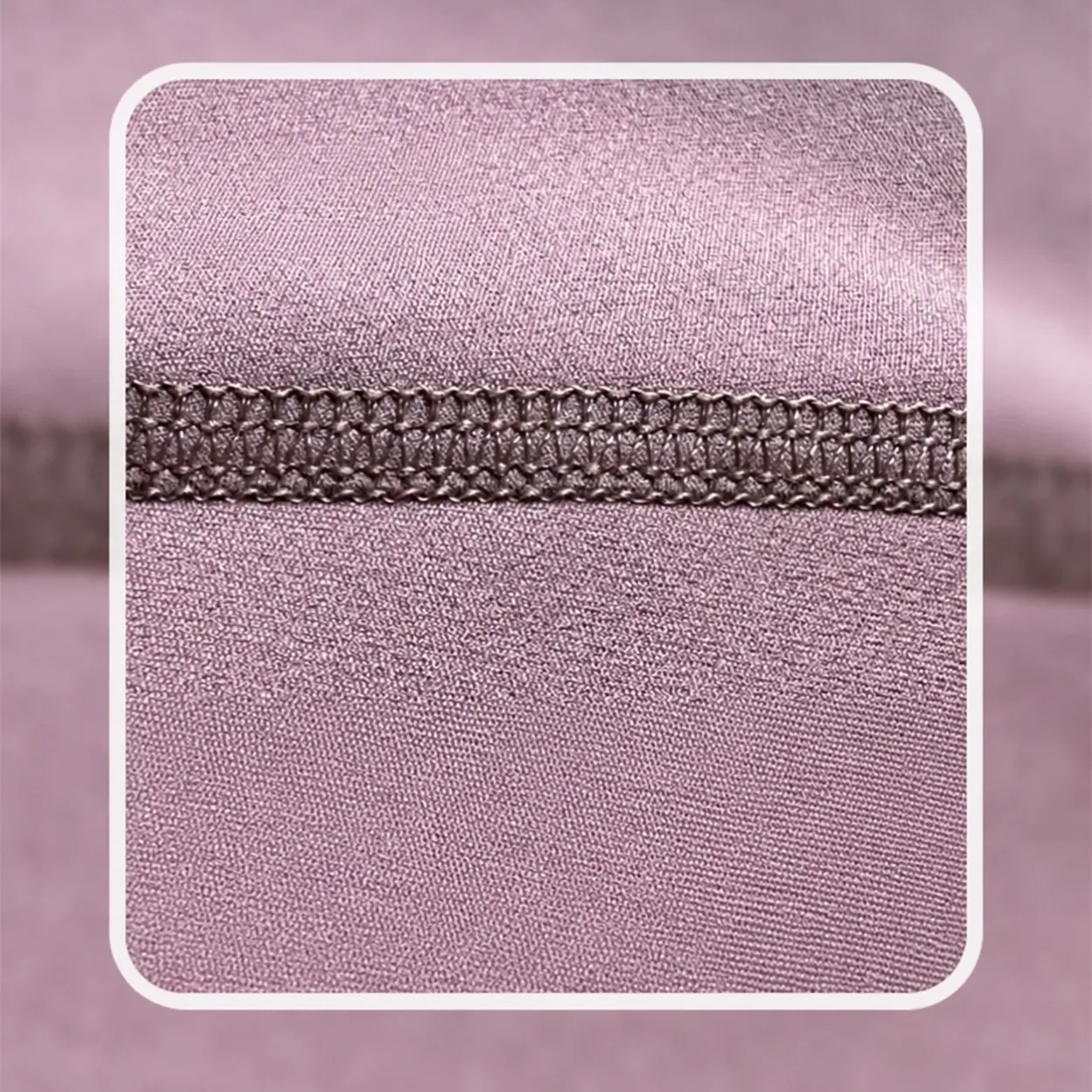
Brushing, sanding, heat setting, moisture-management treatments and other finishing processes can change softness, sheen, friction and drape. Finishing can create a desirable sensory effect, but every benefit involves a trade-off. A very soft brushed surface, for example, should also be evaluated for pilling, color appearance and care performance.
A practical fabric approval process
Before approving fabric for a private-label yoga collection, buyers should review:
- fiber content and supplier specification;
- fabric construction;
- actual GSM and usable width;
- hand feel and surface appearance;
- stretch and recovery by direction;
- opacity in the intended color;
- wash and dimensional stability;
- pilling and colorfastness requirements;
- sewing performance;
- fit in a finished sample.
The final garment is the most meaningful test. A swatch cannot fully show how fabric, pattern, seam placement and waistband construction interact on the body.
The Geny Yoga approach
At Geny Yoga, fabric selection begins with the product’s intended movement, fit, appearance and price position. We compare relevant materials, develop the garment sample and review the complete result before bulk production. Composition remains important—but performance comes from the entire system.
Planning a private-label activewear collection? Contact Emma at Geny Yoga with your target product, fabric feel, activity level, color range and expected quantity. We can help turn a general fabric request into a clearer sampling brief.
#yoga leggings fabric, #activewear fabric manufacturer, #fabric GSM, #stretch and recovery, #private label yoga wear #yoga wear, #activewear, #sportswear, #streetwear, #yoga tops, #leggings, #shorts, #pants, #sports bras, #tanks
Related Activewear Resources
Continue reading these GENY YOGA guides to connect fabric selection, fit, sampling and bulk production decisions.
- How to Choose Activewear Fabric for Yoga, Running and HIIT - compare fabric priorities for yoga, running and high-intensity training.
- Activewear Trends for Yoga Brands in 2026 - plan activewear collections around buyer demand, product function and market direction.
- Why Stitching Thread Color Looks Different on Activewear - understand thread, fabric and dyeing factors that affect finished activewear appearance.
- Explore Custom Activewear Products - compare fabric needs across yoga wear and activewear product categories.
Need help reviewing your activewear project? Contact GENY YOGA with your product category, fabric direction, size range and estimated quantity.