Aug 9, 2026Brand Sourcing & Business Decisions
Custom Activewear Order Process (SOP): From Inquiry to Store Delivery
Follow GENY YOGA’s custom activewear order process from quotation and sampling to color approval, bulk production, inspection, packing and delivery.
Custom Activewear Order Process (SOP): From Inquiry to Store Delivery
A reliable activewear order is not created by production speed alone. It depends on what is confirmed before production begins.
Fabric, color, measurements, stitching, logo placement, packaging and inspection requirements must be clearly defined. If these details remain unclear, even an attractive sample may not lead to consistent bulk production.
The GENY YOGA order process uses several approval points to connect product development, sampling, bulk production and delivery. It applies to custom yoga wear, leggings, sports bras, tops, tanks, shorts, pants, jackets, yoga sets and other private-label sportswear.
The Process at a Glance
The standard process includes:
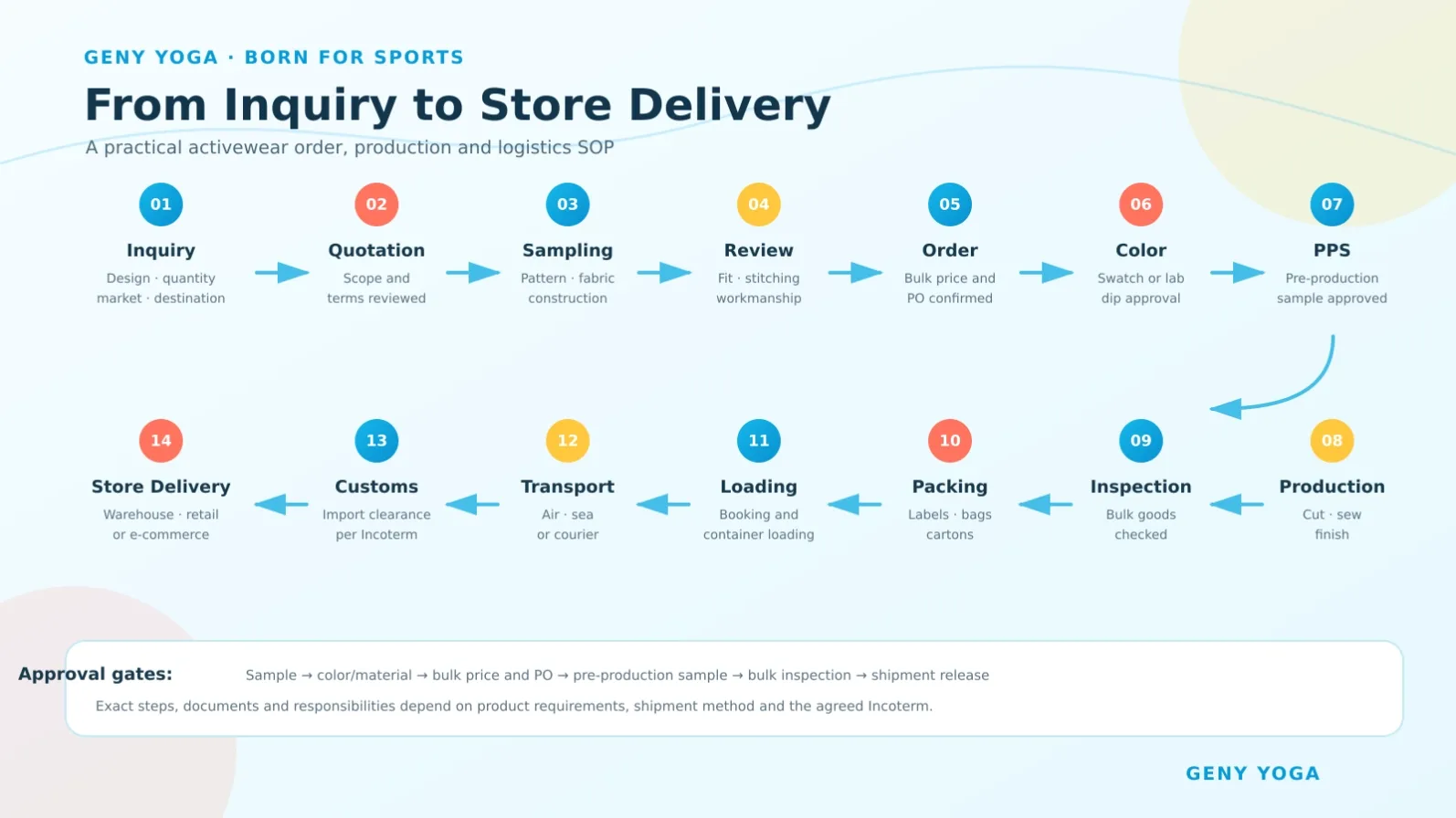
Inquiry → Quotation → Sampling → Sample Review → Order Confirmation → Color Approval → Pre-Production Sample → Bulk Production → Inspection → Packing → Loading → Transportation → Customs Clearance → Store Delivery
Exact steps depend on the product, customization requirements, order quantity, shipping method and agreed Incoterm.
1. Inquiry: Define the Product Before Discussing Price
An accurate quotation begins with usable product information.
Buyers should provide:
- Technical pack or reference images
- Product category
- Fabric composition and target weight
- Size range
- Colors
- Logo and label requirements
- Estimated quantity
- Packaging requirements
- Destination country or port
- Target delivery period
For example, two pairs of yoga leggings may look similar but require different fabrics, waistbands, seams, logos and packaging. These differences affect cost and production requirements.
The more complete the inquiry, the more meaningful the quotation will be.
2. Quotation: Confirm the Scope Behind the Price
A quotation should explain what is included—not provide only a unit price.
GENY YOGA reviews the fabric, product construction, order quantity, colors, trims, branding, packaging and delivery terms before preparing the quotation.
Buyers should confirm:
- Fabric specification
- Product construction
- Quantity by style and color
- Sample charges
- Logo method
- Labels and trims
- Packaging
- Payment terms
- Incoterm
- Quotation validity
If the fabric, quantity or construction changes, the bulk price may also need to be updated.
A clear quotation reduces commercial disagreements later.
3. Sampling: Turn the Design into a Physical Product
Sampling converts drawings, ideas and technical information into a garment that can be evaluated.
Depending on the project, sample development may include:
- Fabric selection
- Pattern development
- Cutting
- Sewing
- Logo application
- Label and trim placement
- Measurement checking
- Construction review
For activewear, fabric and pattern must be evaluated together. Stretch, recovery, weight and compression can affect fit even when the measurements remain unchanged.
The first sample is therefore a development tool—not automatically the final production standard.
4. Sample Review: Check More Than Appearance
A sample should be reviewed systematically.
Important points include:
- Overall fit and silhouette
- Chest, waist, hip and length measurements
- Front and back rise
- Waistband stability
- Stretch and recovery
- Coverage during movement
- Stitching and seam position
- Thread color
- Logo size and placement
- Labels and trims
- Wash-care requirements
Comments should be specific. “Make it better” is difficult to execute; “reduce the waistband height by 1 cm” provides a clear production instruction.
GENY YOGA recommends recording approved measurements, construction details and material references together. See our Activewear Sample Approval Checklist.
5. Order Confirmation: Fix the Commercial and Product Scope
After sample review, the buyer and manufacturer confirm the final bulk requirements.
This stage normally covers:
- Final quantity
- Size and color breakdown
- Confirmed fabric
- Approved construction
- Bulk price
- Labels and packaging
- Payment terms
- Inspection requirements
- Delivery terms
- Purchase order
Production should not begin while major product details remain open.
When a buyer changes the fabric, colors, logo technique or quantities after confirmation, the price and production schedule may require another review.
6. Fabric and Color Approval
Color approval is an important control point because colors displayed on computer and phone screens are not reliable production references.
Depending on the order, approval may be based on:
- Physical color card
- Fabric swatch
- Lab dip
- Approved sample
- Confirmed color standard
Color should be checked on the actual production fabric whenever possible. Fabric texture, dyeing method and lighting conditions can influence its appearance.
The buyer should also confirm logo, thread, zipper, elastic and trim colors when these details are visually important.
7. Pre-Production Sample Approval
The pre-production sample—often called the PPS—connects development with bulk manufacturing.
It should reflect the confirmed:
- Fabric
- Color
- Measurements
- Construction
- Stitching
- Logo
- Labels
- Trims
- Packaging details
The PPS is reviewed before bulk production begins. Its purpose is to ensure that the factory and buyer are working from the same product standard.
A PPS cannot eliminate every production risk, but it can substantially reduce misunderstandings caused by outdated samples or incomplete instructions.
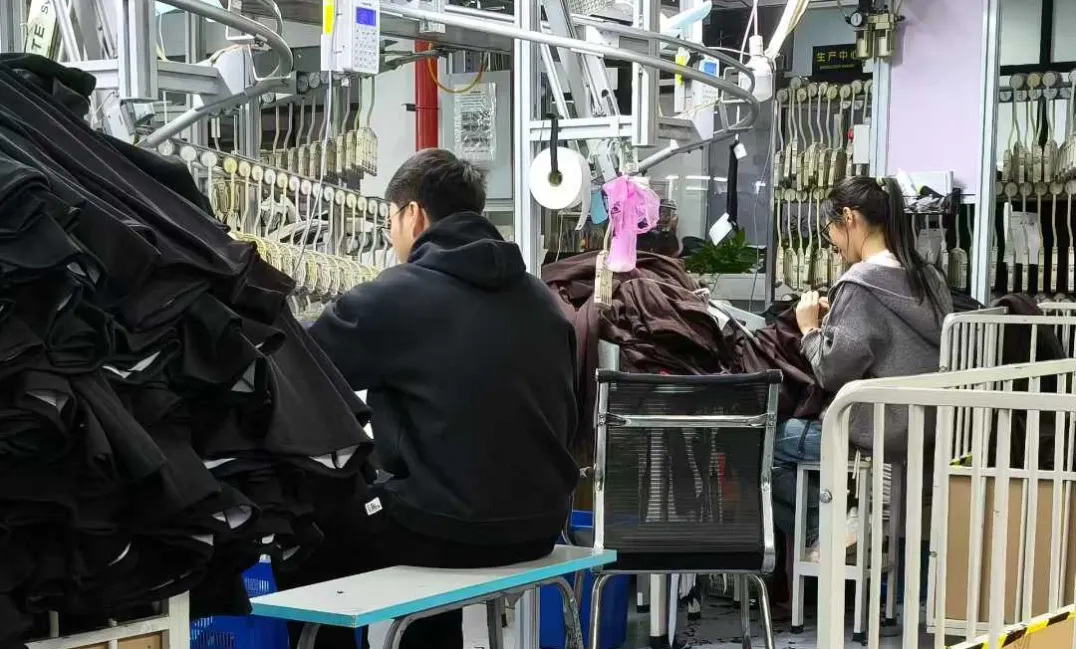
8. Bulk Production
After the required approvals are completed, the order moves into bulk production.
The production stages may include:
- Fabric preparation
- Pattern and marker preparation
- Cutting
- Component sorting
- Logo or heat-transfer application
- Sewing
- Thread trimming
- Finishing
- In-line quality checks
Different activewear products require different construction methods.
Sports bras may require elastic control and support construction. Yoga leggings require attention to waistband stability, stretch seams and crotch construction. Activewear jackets may involve zippers, pockets, thumbholes and multiple panels.
Production methods must follow the approved product requirements rather than a universal process for every garment.
9. Bulk Inspection
Inspection verifies whether bulk goods meet the agreed requirements.
Depending on the order, checks may cover:
- Quantity
- Measurements
- Color and size
- Fabric appearance
- Stitching
- Seam construction
- Workmanship
- Logo and label placement
- Functional components
- Packing requirements
Inspection results should be evaluated against the approved sample, measurement chart and confirmed specifications.
When a third-party inspection is required, the buyer should confirm the inspection standard and arrange the booking before the planned shipping date.
10. Packing
Approved garments are packed according to the buyer’s instructions.
Packing may include:
- Folding
- Hangtags
- Care and size labels
- Barcode or SKU stickers
- Individual polybags
- Size or color assortments
- Inner cartons
- Master cartons
- Shipping marks
Before dispatch, carton quantity, dimensions, gross weight and net weight are recorded for shipment preparation.
Retail-ready packaging, special barcode systems or sustainable packing materials should be discussed during quotation because they can affect cost and preparation time.
11. Shipment Booking and Loading
The logistics arrangement is based on order volume, destination, delivery requirements and the agreed Incoterm.
Common shipping methods include:
- Express courier for samples
- Air freight for time-sensitive orders
- Sea freight for commercial orders
- Full-container load—FCL
- Less-than-container load—LCL
For container shipments, carton quantities and shipping marks are checked before loading. Loading records or photographs can be arranged when included in the confirmed order requirements.
12. International Transportation
After dispatch, the goods travel through the selected courier, airline or shipping carrier.
Transit times are estimates. Actual delivery may be affected by:
- Carrier schedules
- Weather
- Port congestion
- Customs procedures
- Public holidays
- Destination handling
Buyers should avoid planning store launches based only on the estimated sailing or flight time. Customs clearance and local delivery also need to be considered.
13. Import Customs Clearance
When goods arrive in the destination country, the responsible importing party completes customs clearance according to the agreed Incoterm.
Import procedures may involve:
- Customs declaration
- Commercial invoice
- Packing list
- Freight documents
- Import duties
- Taxes
- Customs inspection
- Destination charges
The buyer should confirm local import requirements with a qualified freight forwarder or customs broker before shipment.
GENY YOGA does not claim responsibility for destination customs clearance unless it is specifically included in the agreed delivery terms.
14. Receipt and Store Distribution
After customs release, the buyer receives the shipment and distributes the products to:
- Retail stores
- Brand warehouses
- Distributors
- Fitness studios
- E-commerce fulfillment centers
- Other sales channels
The buyer should check carton quantities and visible shipping condition after receipt. Any transportation damage or quantity discrepancy should be photographed and documented promptly.
Feedback from the first order can also be used to improve sizing, packaging, product details and repeat-order planning.
The Approval Gates That Reduce Order Risk
The most important part of the SOP is not the number of steps. It is the approval system between them.
Sample Approval
Confirms fit, measurements, fabric direction and construction.
Color and Material Approval
Confirms the physical fabric, color and relevant trim references.
Price and Purchase Order Confirmation
Confirms the commercial scope, quantity, packaging and delivery terms.
Pre-Production Sample Approval
Confirms the final product standard before bulk manufacturing.
Bulk Inspection
Checks finished goods against the approved requirements.
Shipment Release
Confirms that inspection, packing and shipping information are ready before dispatch.
These approval gates reduce avoidable risk. They do not replace good production management, but they provide a clearer basis for communication and responsibility.
Why Choose GENY YOGA?
Activewear Manufacturing Focus
GENY YOGA has manufactured sportswear since 2012, supporting products such as yoga leggings, sports bras, tops, tanks, shorts, pants, jackets and activewear sets.
Product Development Support
We support OEM, ODM and private-label projects from technical review and sampling through bulk production.
Practical Approval Process
Fabric, color, fit, construction and packaging are confirmed at relevant stages instead of leaving major decisions until production is complete.
Product-Specific Production
We recognize that leggings, sports bras, tops and jackets require different fabrics, patterns and sewing methods.
Quality-Control Coordination
Quality attention covers materials, measurements, stitching, logos, labels, finished garments and packing according to confirmed order requirements.
Production and Logistics Connection
Sampling, production, inspection, packing and shipment preparation are treated as connected parts of one order—not unrelated activities.
Our objective is not to promise that no problem can ever occur. It is to identify requirements earlier, maintain clear working references and reduce preventable production risk.
What Should You Send for a Quotation?
To receive a useful project review, please send:
- Tech pack or reference images
- Product category
- Fabric direction
- Size range
- Colors
- Estimated quantity
- Logo method
- Label and packaging requirements
- Destination
- Target delivery period
If some information is not yet available, tell us which stage your project has reached. We can then discuss the appropriate next step.
Frequently Asked Questions
How long does the activewear order process take?
Timing depends on product complexity, sample revisions, material availability, order quantity and shipping method. A realistic schedule should be confirmed after the product requirements are reviewed.
Can GENY YOGA develop products from reference images?
Reference images can be used to discuss the design direction, but measurements, fabric, construction and branding requirements still need to be confirmed.
Is an approved sample enough for bulk production?
The sample is important, but it should be supported by confirmed measurements, material references, colors, artwork and packing instructions.
Can buyers arrange third-party inspection?
Yes, third-party inspection requirements can be discussed and should be scheduled before the planned shipment date.
Does GENY YOGA handle customs clearance?
Responsibility depends on the agreed Incoterm. Buyers should confirm destination customs requirements with their freight forwarder or customs broker.
Start Your Custom Activewear Project
A reliable order begins with clear information.
Send GENY YOGA your product design, fabric requirements, size range, quantity, branding details, packaging requirements and destination. We will review the available information and discuss the quotation, sampling and production process with you.
Email: info@genyyoga.com
WhatsApp: +86 19020932815
GENY YOGA — Born for Sports. Built for Long-Term Cooperation.
Related Posts
Hot Activewear Products
#custom activewear order process, #activewear manufacturing process, #yoga wear manufacturer, #private label activewear, #OEM activewear manufacturer, #sportswear production, #activewear sampling, #bulk production inspection